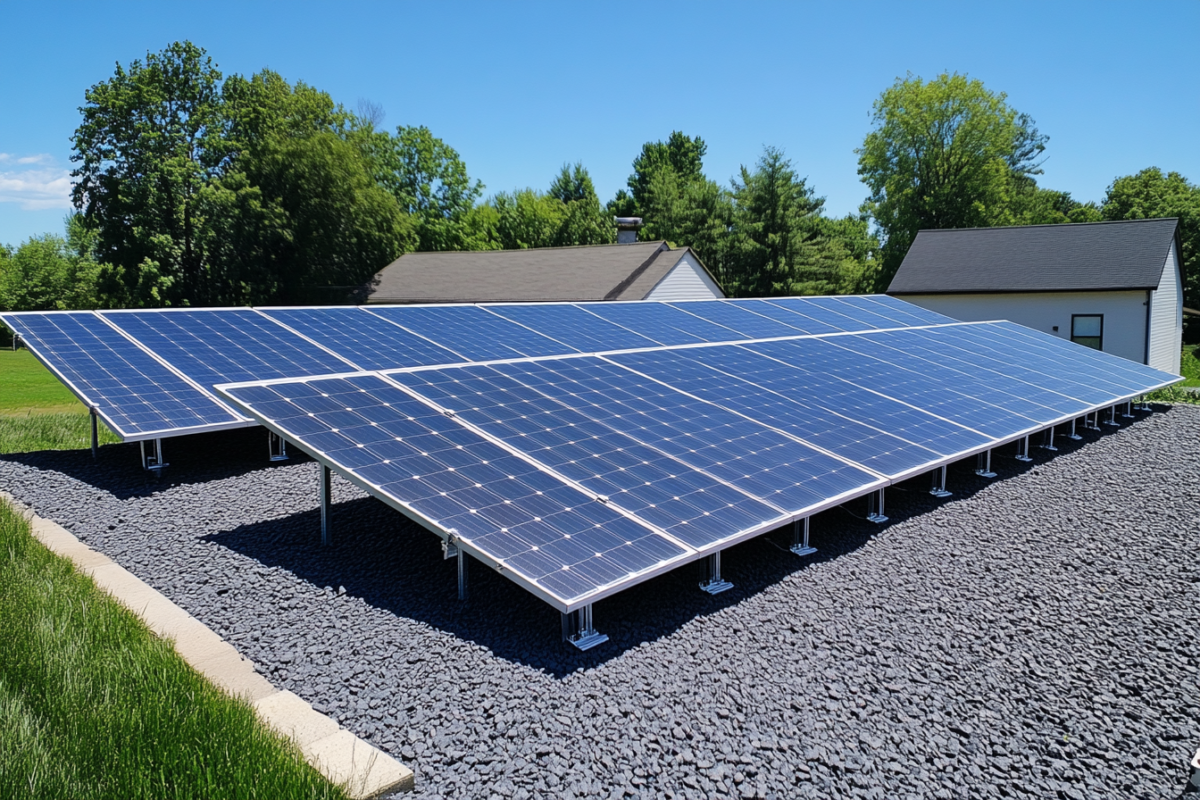
In the face of the climate emergency and the need to diversify energy sources, solar panels have established themselves as a major player in the global energy transition. These devices, capable of converting sunlight into electricity, are increasingly appealing to individuals and businesses seeking sustainable solutions. But what makes this technology so attractive, and what are its true benefits for our planet and our daily lives? With constant innovations and an increasingly evident profitability, solar panels could very well be the answer to many contemporary issues.
The operation of solar panels
To understand the impact of solar panels, it is essential to grasp how they transform a natural resource into usable energy.
- Photovoltaic cells: Solar panels are made up of photovoltaic cells, typically made from silicon. These cells capture photons from the sun and convert them into electricity.
- Direct current: The electricity generated is in the form of direct current, which must then be converted into alternating current by an inverter to be used by household electrical devices.
- Electric grid: In the case of excess energy, it can be fed back into the electric grid, thus providing savings on the electricity bill.
Ecological and economic advantages
The massive adoption of solar panels presents considerable benefits on several fronts.
Firstly, solar energy is an inexhaustible renewable resource. Unlike fossil fuels, it does not produce greenhouse gas emissions, thus contributing to the reduction of carbon footprints. By equipping a home with solar panels, one actively participates in the fight against climate change.
Secondly, from a financial perspective, installing solar panels can prove to be extremely profitable. Once the initial investment is recouped, often aided by government subsidies, the energy produced becomes nearly free, allowing for substantial long-term savings.
Recent technological innovations
Technological advancements in the field of solar panels continue to amaze with their ingenuity and ability to push the boundaries of energy efficiency.
A notable example is the development of bifacial solar cells, which harness not only direct sunlight but also light reflected from the ground and surroundings. This innovation promises a significant increase in energy yield.
Moreover, research into low-cost materials, such as perovskite, could make solar panels more financially accessible while increasing their efficiency. These advancements pave the way for broader adoption, even in regions where the initial cost was a barrier.
Future prospects
In the current context, the future of solar panels looks particularly promising. Several factors contribute to this trend.
- With increasing urbanization and the accompanying demand for energy, renewable energy solutions are becoming essential to meet needs without compromising the environment.
- Governments around the world continue to strengthen their policies in favor of renewable energies, with ambitious goals to reduce their dependence on fossil fuels.
- Finally, consumer awareness and their willingness to reduce their ecological impact play a crucial role in the growing popularity of solar solutions.
Solar panels are part of a dynamic shift towards a cleaner and more sustainable energy future. Their ability to provide an accessible and profitable solution to contemporary ecological and economic challenges only reinforces their preferred position in the global energy landscape. As technologies continue to evolve and awareness grows, it seems certain that the sun will shine increasingly on rooftops around the world.