
Lilies are among the best-selling cut flowers in France. When a bouquet starts to wilt, it’s natural to want to replant the stems in the garden and watch them bloom again. But a few botanical facts call for caution: not all bouquet lilies are suitable for this, and the method depends entirely on what the bouquet actually contains.
Cut lilies or potted lilies: a distinction that changes everything
It’s easy to confuse a cut lily stem with a lily sold in a pot. This often leads to repeated planting failures.
A potted lily has a living bulb beneath the surface of the growing medium. After flowering, the bulb can be kept and allowed to go dormant before being replanted in the ground. It has a good chance of growing again, provided it remains healthy and firm to the touch.
A lily stem from a bouquet, on the other hand, does not turn into a bulb simply by being planted in the ground. Lilies are propagated from bulbs, their scales or bulblets—not from a cut stem placed in water or stuck into potting soil. Trying to propagate a bouquet stem as you would a rose does not work with Lilium.
So before you get started, check what you have. A potted lily with its bulb has a real chance of growing again. A bouquet of cut stems with no bulb or roots has virtually no chance using conventional methods. If you want to get a cut lily to bloom again, keep this limitation in mind from the outset.
Aerial bulblets on lily stems: spotting the only viable option
There is one special case in which a bouquet stem can produce a new plant. Some lily varieties form small aerial bulblets in the leaf axils along the stem. These round structures, sometimes as small as a pea, are natural propagation organs.
Not all varieties produce them
Asiatic lilies and some tiger hybrids produce bulblets more readily. Oriental lilies, often found in bouquets for their strong fragrance, rarely produce them. The absence of bulblets on a stem does not mean the plant was unhealthy: it is a varietal characteristic.
How to collect and plant these bulblets
If you spot bulblets on the stems in your bouquet, the process is simple:
- Carefully detach each bulblet when the stem starts to dry, checking that it is firm and not soft
- Plant them in a pot filled with a light mix (equal parts potting soil and sand), at a depth of about twice their diameter
- Keep the growing medium moist but not waterlogged, in a bright spot away from harsh direct sunlight
- Transplant them into the garden the following spring or in autumn, once the young bulbs have developed a few visible roots
Bulblets need to grow before they can flower. They will not necessarily produce a flowering lily the following season. Depending on the variety and growing conditions, you’ll need to be patient for several seasons, not just a few weeks.
Planting lily bulbs in the ground: soil, depth and drainage
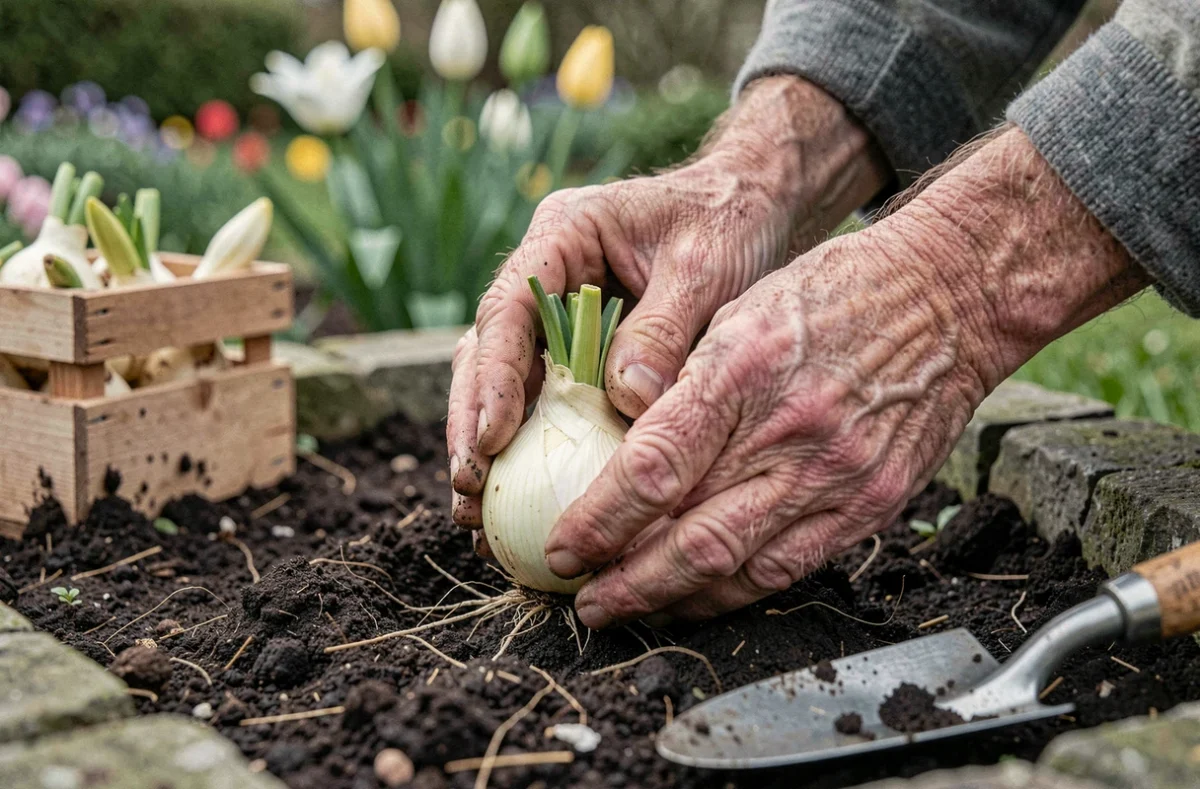
Whether the bulb comes from a spent potted lily or from bulblets grown in pots, the same principles apply when planting in the garden.
Lilies need well-drained soil rich in organic matter. Soil that holds water in winter causes the bulb to rot, and no fertilizer can make up for poor drainage. If your soil is clay-heavy, add gravel or coarse sand to the bottom of the planting hole.
Planting depth and spacing in the garden
Plant a lily bulb with its tip pointing upward, at a depth of about three times its height. For a standard-sized bulb, this means around ten centimeters below the surface. Space bulbs at least fifteen centimeters apart to allow their roots to develop.
Autumn is the ideal time to plant lily bulbs. The still-warm soil allows them to establish roots before winter, while the winter cold provides the vernalization needed for future flowering. Spring planting is still possible, but flowering will often be delayed or less abundant in the first year.
Conditions for getting lilies to bloom again in the garden
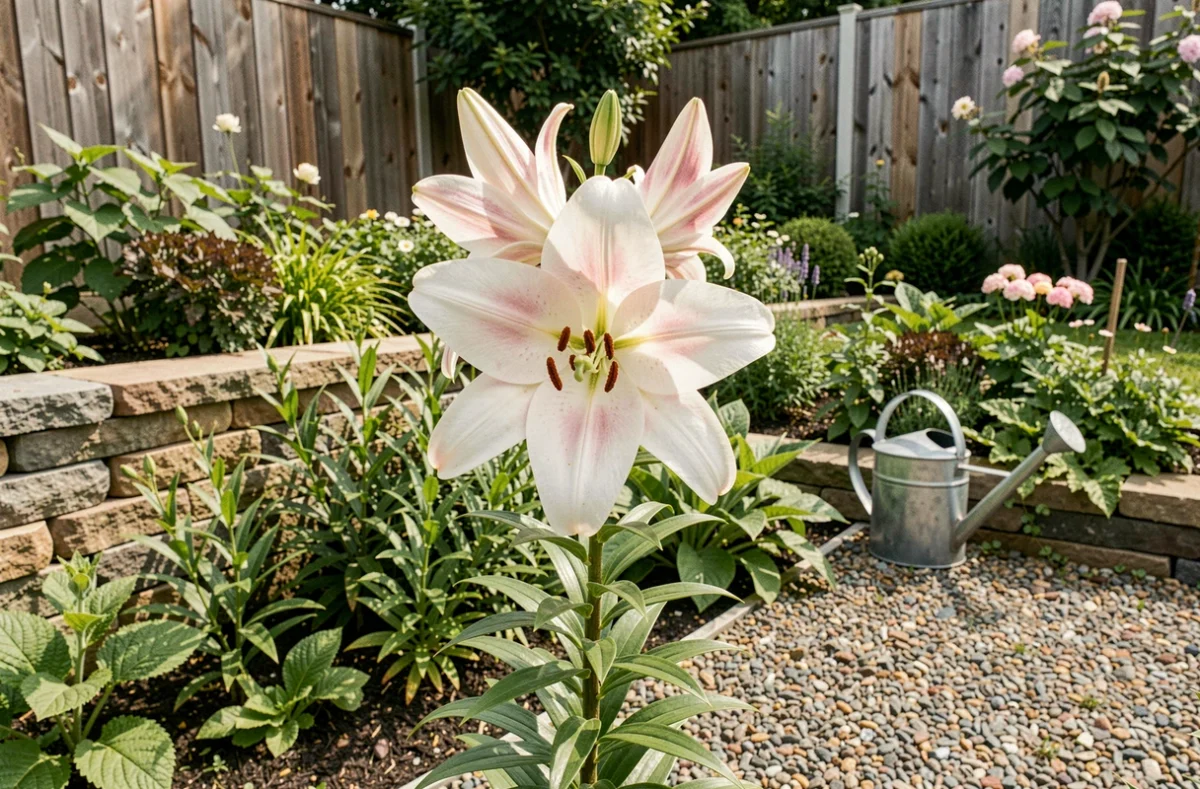
Planting a bulb does not guarantee that it will bloom again. Several factors determine whether a lily can replenish its reserves and produce a flowering stem.
Sun exposure plays a direct role: most lilies prefer full sun on their foliage and shade around their base. A light layer of mulch or ground-cover plants around the stems protects the bulbs from excessive soil heat in summer.
After flowering, leave the stem and leaves in place until they have completely dried out. Green foliage continues to nourish the bulb through photosynthesis. Cutting the leaves too early deprives the bulb of the resources it needs to flower the following year.
Fertilizer and feeding lilies
Applying a potassium-rich fertilizer (such as tomato or bulb fertilizer) when growth resumes in spring supports the formation of flower buds. A second application after flowering helps the bulb replenish its reserves. Too much nitrogen encourages foliage at the expense of flowers.
Water moderately. Lilies tolerate a short dry spell better than waterlogged soil. In winter, bulbs planted in the ground generally do not need watering in most parts of France.
Known limitations and realistic expectations
Available sources do not provide a single timeframe for reblooming that applies to every variety and garden condition. A healthy bulb recovered from a pot may bloom again as soon as the summer after it is planted in autumn. Bulblets from a bouquet stem will probably take several seasons to reach flowering size.
The lily variety also affects its hardiness. Asiatic hybrids tolerate cold well and naturalize easily. Oriental lilies are more demanding and less tolerant of harsh winters and heavy soils.
Growing a flowering garden lily from a bouquet is not a straightforward gardening project. Success depends on the starting material: a bulb from a pot, or bulblets taken from a variety that produces them. A cut stem on its own, however fresh, will not produce a result. Knowing what you are planting and adjusting your expectations to the lily’s natural growth cycle is the best approach.