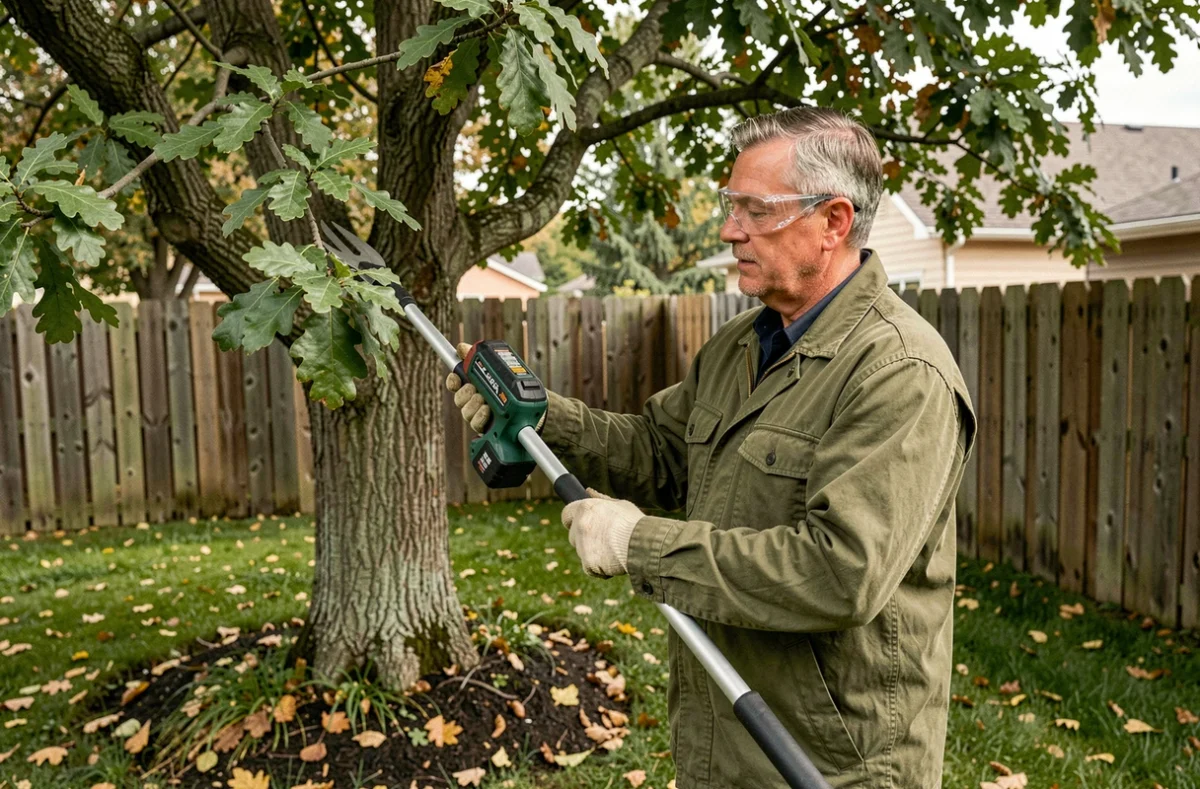
A pole saw is a compact chainsaw designed to be operated with one hand during work at height. Its top handle and short guide bar distinguish it from a traditional chainsaw, which is heavier and intended for ground work. Choosing the best pole saw involves balancing motorization, cutting length, weight, and the actual use you will make of it in your garden.
Regulations and safety before choosing a pole saw
Before comparing models, some regulatory points deserve your attention.
The authorized hours for using a pole saw are not set at the national level. They depend on the prefectural and municipal orders of your municipality. Even if you respect these time slots, excessive, repeated, or prolonged noise can constitute an offense under articles R1337-6 to R1337-10-2 of the Public Health Code.
If your trees are near power lines or buried networks, the situation becomes more complicated. A declaration of intent to commence work (DICT) may be mandatory, in accordance with articles R554-25 and R554-31 of the Environmental Code. In this case, entrusting the pruning to a qualified and equipped professional remains the safest solution. The choice of the pole saw model then takes a back seat.
To delve into the technical characteristics of the various available models, the detailed sheets on elagueuse-warrior.com allow you to compare motorizations, weights, and guide lengths before purchase.
Battery or gas pole saw: motorization and autonomy
The choice of motorization determines the autonomy, weight, and maintenance of your pole saw. The two main types are gas and battery, each with different trade-offs.
Battery pole saw
A battery pole saw starts instantly, produces no exhaust gases, and requires very little mechanical maintenance. Its weight is generally lighter than a gas model, which reduces fatigue during prolonged cuts at height.
The main limitation remains autonomy. A standard battery allows for work between several tens of minutes and over an hour depending on the capacity and intensity of the cuts. For a garden with a few fruit or ornamental trees, this is more than sufficient.
The European regulation (EU) 2023/1542 gradually imposes requirements for battery durability and replacement. Before purchasing, check that the manufacturer offers replacement batteries and that the pack is compatible with other tools in the same range. A multi-platform system (one battery for the chainsaw, hedge trimmer, blower) makes the investment worthwhile.
Gas pole saw
The gas engine offers autonomy limited only by the fuel tank, making it suitable for long jobs or large properties. The available power is often higher, allowing for cutting larger diameter branches without straining.
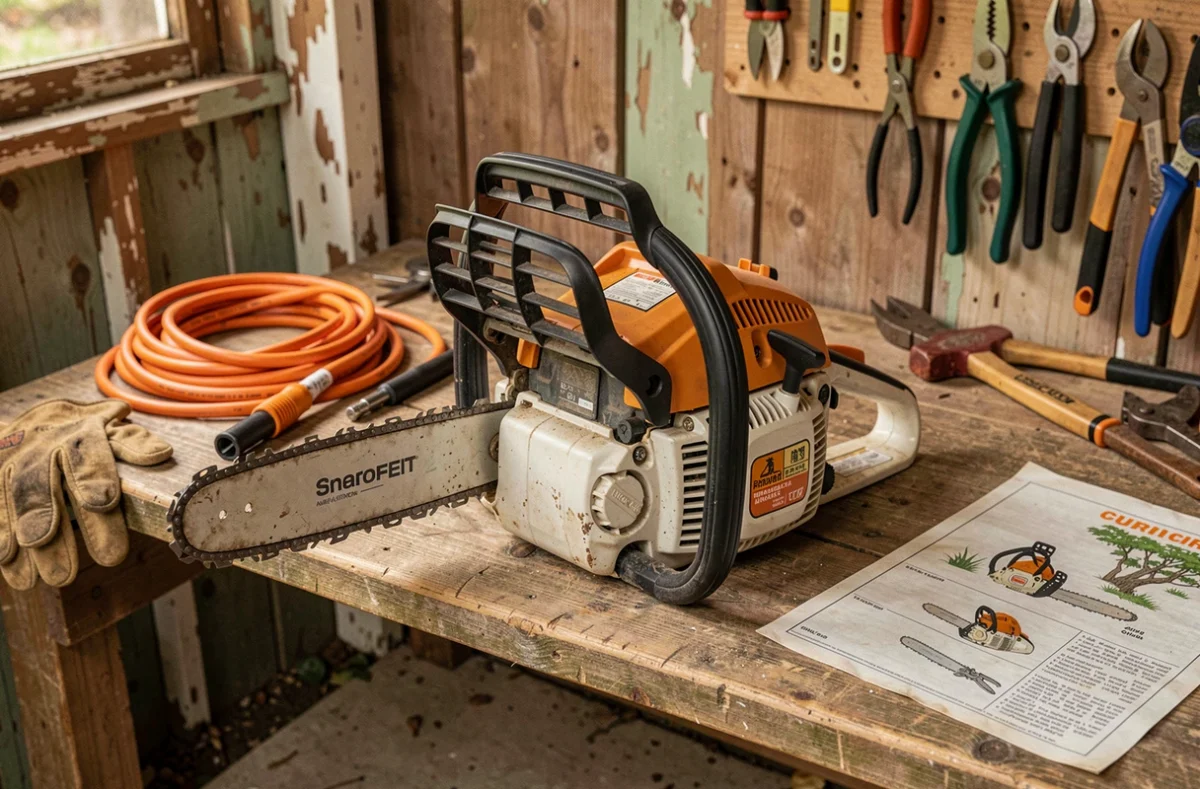
On the downside, the weight and vibrations of a gas engine increase fatigue during work sessions at height. Maintenance is also more demanding: spark plug, air filter, oil-gas mixture, carburetor adjustment.
Guide bar length and cutting diameter
The guide bar determines the maximum diameter of branches you can cut in a single pass. On a compact pole saw, the guide length typically varies between twenty and thirty centimeters.
- A short guide favors maneuverability in dense branches and reduces the total weight of the tool, which is crucial when working one-handed at height.
- A longer guide allows for tackling larger diameter branches but adds weight to the pole saw and makes it less agile in confined spaces between branches.
- For regular maintenance of fruit or hardwood trees in the garden, a guide of about twenty centimeters covers the majority of needs for a homeowner.
The chain itself is important. A fine-pitch chain generates less vibration and offers a cleaner cut, which promotes healing of the tree. Check the availability of replacement chains for your model: some proprietary references complicate replacement.
Telescopic pole saw: reach branches without leaving the ground
The telescopic pole saw is a variant that attaches the cutting head to the end of a telescopic handle. It allows you to reach branches located several meters high without climbing or using a ladder.
This type of model is suitable for homeowners who want to prune medium-sized trees without specific training for working at height. The downside is a higher total weight and less precise cutting control than that of a compact pole saw used directly in the tree.
The choice between a traditional pole saw and a telescopic pole saw therefore depends on your specific situation:
- If you are comfortable on a ladder or harness and your trees require precise work, the compact “top handle” pole saw remains the reference tool.
- If your interventions are limited to removing low or medium branches from the ground, the telescopic pole saw offers a better safety-practicality ratio.
- Some manufacturers offer modular systems where the cutting head detaches from the pole to become a compact pole saw. This versatility comes at a cost, but it avoids having to purchase two separate tools.
Weight and balance: the criterion that technical sheets underestimate
Power and guide length are at the top of product sheets. Weight is also mentioned, but rarely with the battery or full tank. However, it is the operating weight that determines your real comfort.
A difference of a few hundred grams may seem negligible on the ground. With arms extended above your head for several minutes, it radically changes the experience. Prioritize the lightest model compatible with your cutting needs, and test the balance in hand if possible before purchasing.
The ergonomics of the anti-vibration system also matter. Excessive vibrations transmitted to the wrist and forearm cause accelerated fatigue and can lead to musculoskeletal disorders with regular use.
The right choice for a homeowner who maintains a few trees each year often boils down to one sentence: a battery pole saw with a guide of about twenty centimeters, as light as possible, covers the vast majority of situations without compromising on cutting quality.