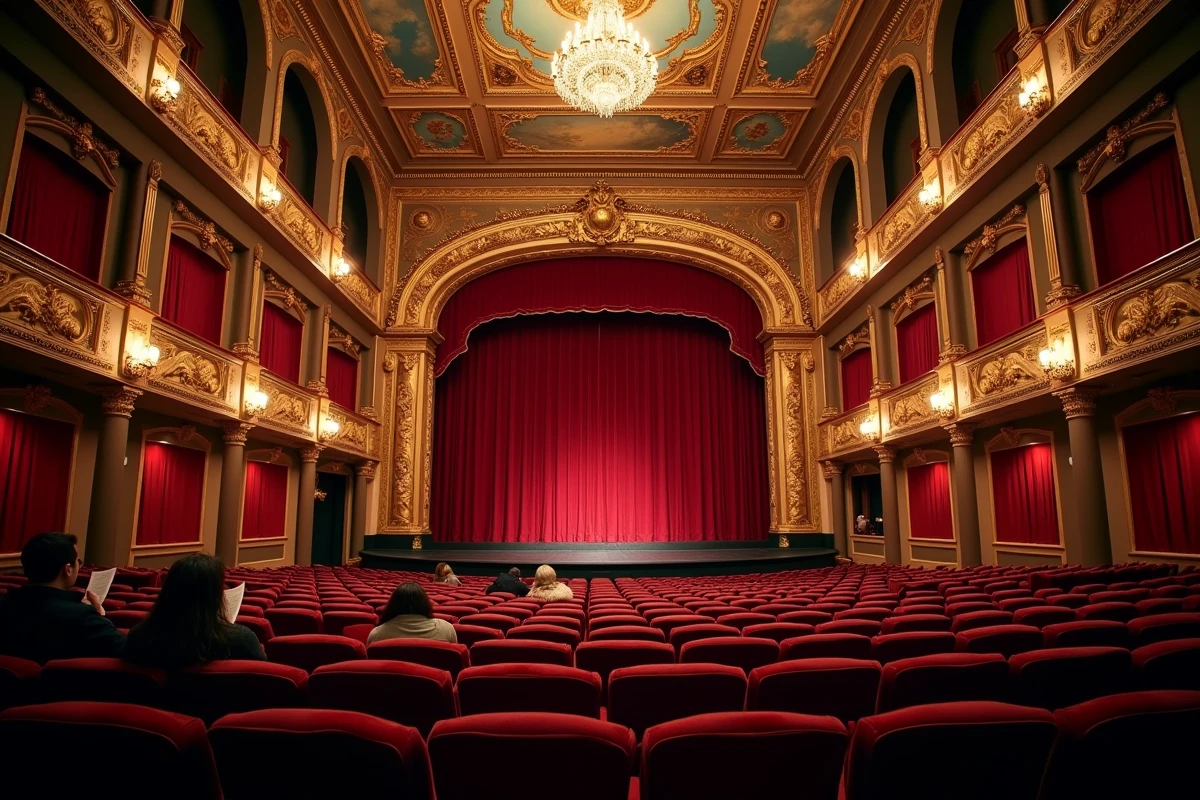
Choosing your seat at the Théâtre Mogador for The Lion King is not just about deciding between the orchestra and the balcony. The layout of the venue, with its overhangs, railings, and surtitling zones, creates visual comfort disparities that are much more pronounced than a simple seating plan might suggest.
Surtitling and Side Seats at the Théâtre Mogador: The Invisible Constraint
Seating guides focus on the distance to the stage and the viewing angle. They almost systematically overlook a technical parameter: the visibility zone of the surtitling screens. The official seating plan for The Lion King (referenced as “Plan_de_salle_LRL.pdf”) precisely delineates this area.
Several side seats in the balcony offer a decent angle on the stage but fall outside the coverage of the surtitling screens. For non-French-speaking spectators or those with hearing impairments who rely on the displayed texts, these seats become problematic.
A detailed guide lists the best seats to avoid at the Théâtre Mogador considering this parameter, allowing for filtering of seats before purchase.
Before booking, check if you will need the surtitling. If so, avoid the extreme sides of the first balcony and favor the central blocks, where visual coverage of the screens is guaranteed.

Orchestra, Balcony, and Box: Comparative Table of Seating Areas
The Mogador auditorium is divided into three main areas. The table below summarizes their main characteristics for The Lion King, based on audience feedback published after 2023.
| Area | Advantages | Limitations | Suitable Profile |
|---|---|---|---|
| Orchestra (central rows N to Q) | Maximum sound immersion, proximity to the animal parades in the central aisle | Stage height sometimes obscures the floor for the front rows | Audiences seeking the physical emotion of the show |
| First Balcony (rows A to C, central block) | Panoramic view of the sets and aerial choreography, visible surtitles | Increased distance, less direct sound immersion | Audiences wanting to embrace the entire scenography |
| Box | Moderate elevation, often mid-range pricing | Overhang from the balcony above, railing obstructing the lower stage from certain seats | Budget-conscious, tolerance for partial obstructions |
The central rows of the orchestra (N to Q) and the first three rows of the first balcony receive the majority of positive feedback. In contrast, box seats under the balcony overhang regularly generate negative comments regarding the obstructed view.
Seats to Avoid at the Théâtre Mogador: Identified Risk Areas
Not all seats are created equal, even within the same price category. Three configurations frequently appear in reviews post-2023 as sources of disappointment.
- First rows of the orchestra (A to E): the stage is elevated, forcing viewers to constantly look up. Visual effects designed to be seen from a slight overhead angle lose their impact, and the sound from the orchestra pit can drown out the voices.
- Extreme side seats of the first balcony: the angle on the stage deteriorates significantly, part of the scenery on the opposite side disappears, and the surtitling screens become unreadable from some of these seats.
- Last rows of the box: the ceiling formed by the upper balcony compresses the field of vision. The railing adds a low obstruction. The contrast between the price paid and the actual experience is the most commented on in recent reviews.
The site UneVueDeMaPlace allows you to view photos taken from specific seats (for example, “Balcony, row Nn, seat 2”), row by row. This tool provides a concrete verification that schematic plans do not offer.

View Height and Proximity to Stage: What Recent Feedback Reveals
Reviews published after 2023 highlight a sharper contrast than before between the orchestra and the balcony. The staging of The Lion King intensely utilizes the central aisle of the orchestra: life-sized puppets parade just a few meters from the spectators in the side rows. This passage through the auditorium, a signature of the show, loses all its effect from the balcony.
Conversely, aerial sequences and lighting effects across the width of the stage are better perceived from an elevated position. The central first balcony offers the best overall view of the scenography, with enough distance to appreciate the tableaux in their entirety.
What Compromise Between Immersion and Overall View
No seat perfectly combines proximity and panorama. Rows N to Q of the orchestra, slightly set back from the center, provide the best-documented balance. They capture the parade in the aisle while maintaining a sufficient viewing angle on the upper stage.
For families with children, the elevation of the first balcony (rows A to C) offers a practical advantage: the view is not blocked by spectators in the row in front, unlike in the orchestra where height differences can be problematic.
The final choice depends on what you expect from the show. If the thrill of the animals passing through the auditorium is paramount, the central orchestra remains the reference. If you prefer to absorb each tableau as a complete visual composition, the central first balcony better meets this expectation. The areas to avoid remain the same regardless of the criterion: extreme sides, first rows too close, and last rows of the box under overhang.