In a world where personalization reigns, embroidery on textiles has established itself as an essential technique to infuse a unique and refined touch to clothing and accessories. Its charm lies in its ability to transform a simple fabric into a work of art, but this magic does not happen without constraints. In the age of ultra-modern machines and sophisticated software, one might think that everything is possible. However, technical boundaries remain, challenging creators and sometimes limiting their imagination. These limits are not only due to the complexity of the designs or the nature of the materials but also to the technologies employed and the precision required for each project. The balance between artistic vision and technical capabilities is a delicate exercise where every detail matters.
The complexity of designs and technical constraints
The complexity of designs is often the first barrier encountered when personalizing textiles through embroidery. The meticulous details are obstacles to overcome in order to achieve a faithful rendering of the original creation.
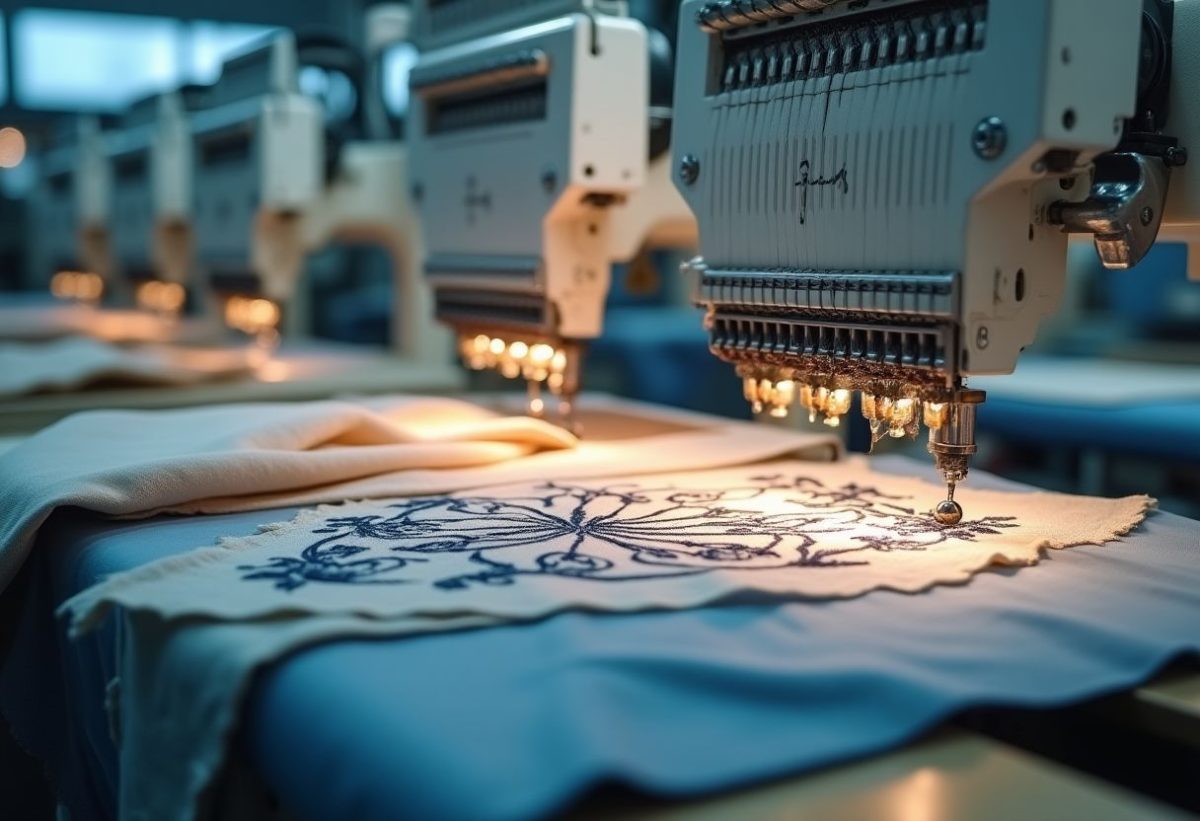
Modern embroidery machines are equipped with cutting-edge technologies, but they cannot always reproduce extremely detailed designs. A design that is too complex requires a very high stitch density, which can lead to thread tension issues or risks of fabric perforation. Another challenge lies in the number of colors used. Although some machines can handle multiple colors simultaneously, the precision of color changes can sometimes be problematic, especially if the shades are similar.
Overly dense designs or frequent color changes can also significantly extend production time, thus impacting the economic viability of the project. Finally, the limitations of the software used for design can restrict the size and type of files accepted, thereby affecting the fineness of the details that can be achieved.
The limits imposed by materials
The choice of material is a critical variable that directly influences the quality of the embroidery. Not all fabrics lend themselves easily to this meticulous art.
- Stretch fabrics: textiles like spandex or jersey, while valued for their comfort, pose particular challenges. The tension exerted by the embroidery can stretch the fabric, causing distortions in the design.
- Delicate materials: silks and other delicate fabrics require special attention. Embroidery can damage their structure, making their handling complex and risky.
- Thick materials: leather or heavy canvas can resist the needle, requiring specific machines and increased expertise to avoid compromising the integrity of the fabric.
Choosing the right stabilizer is also essential to ensure that the fabric does not distort under the pressure of the embroidery, and this varies according to the nature of the material used.
Technologies used and innovations
In the world of embroidery, technology plays a fundamental role in pushing the boundaries of what can be achieved, but it also imposes restrictions that influence the final results.
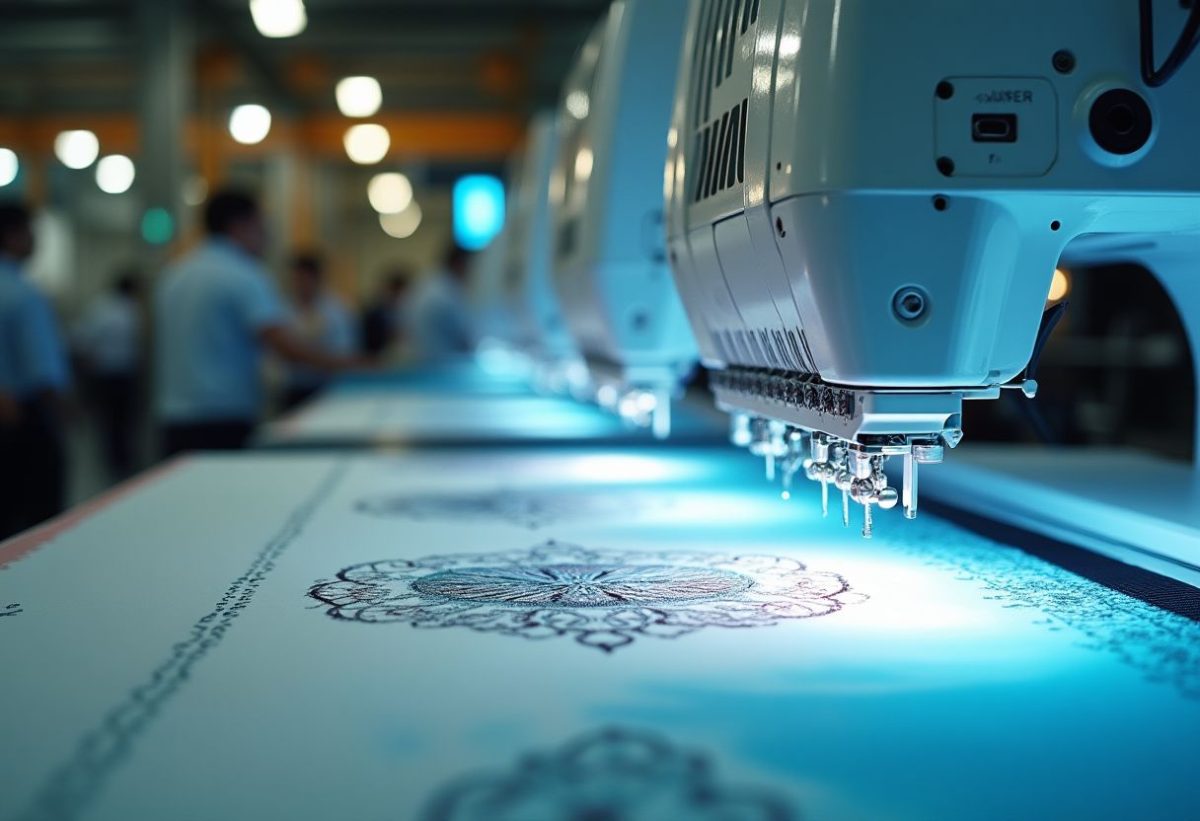
Digital embroidery machines have revolutionized the way designs are created, allowing for the integration of computer-aided design software that offers unprecedented precision. However, manipulating these tools requires specialized training. Moreover, even the most advanced machines have physical limits regarding the size of hoops or the number of colors that can be used in a single operation.
Recent innovations, such as 3D embroidery, open new horizons but require specific technical adjustments to achieve volume effects. The cost of these advanced technologies can also be prohibitive, limiting their accessibility to large companies or large-scale projects.
The balance between creativity and feasibility
Embroidery is an art that demands a perfect harmony between artistic vision and technical feasibility, a delicate balance that artists and manufacturers strive to maintain.
Each project begins with an idea, but transforming that idea into a finished product requires a deep understanding of material and technological constraints. The dialogue between the creator and the manufacturer is essential to adjust expectations and achieve a result that is aesthetically and functionally satisfying.
The importance of planning cannot be overstated. Good preparation and realistic simulation allow for anticipating problems before they occur. The combination of technical and artistic skills is the key to transforming ideas into embroidered realizations that respect the designer’s initial intentions while remaining technically feasible.
The personalization of textiles through embroidery is a delicate dance between creative desires and technical constraints. Each project is a quest to push boundaries while respecting the unyielding laws of technology and material. Technological advancements will continue to expand possibilities, but challenges will remain fertile ground for innovation and artistic expression. Thus, embroidery remains a field where art and technique meet and enrich each other, constantly challenging conventions to create new forms of textile beauty.