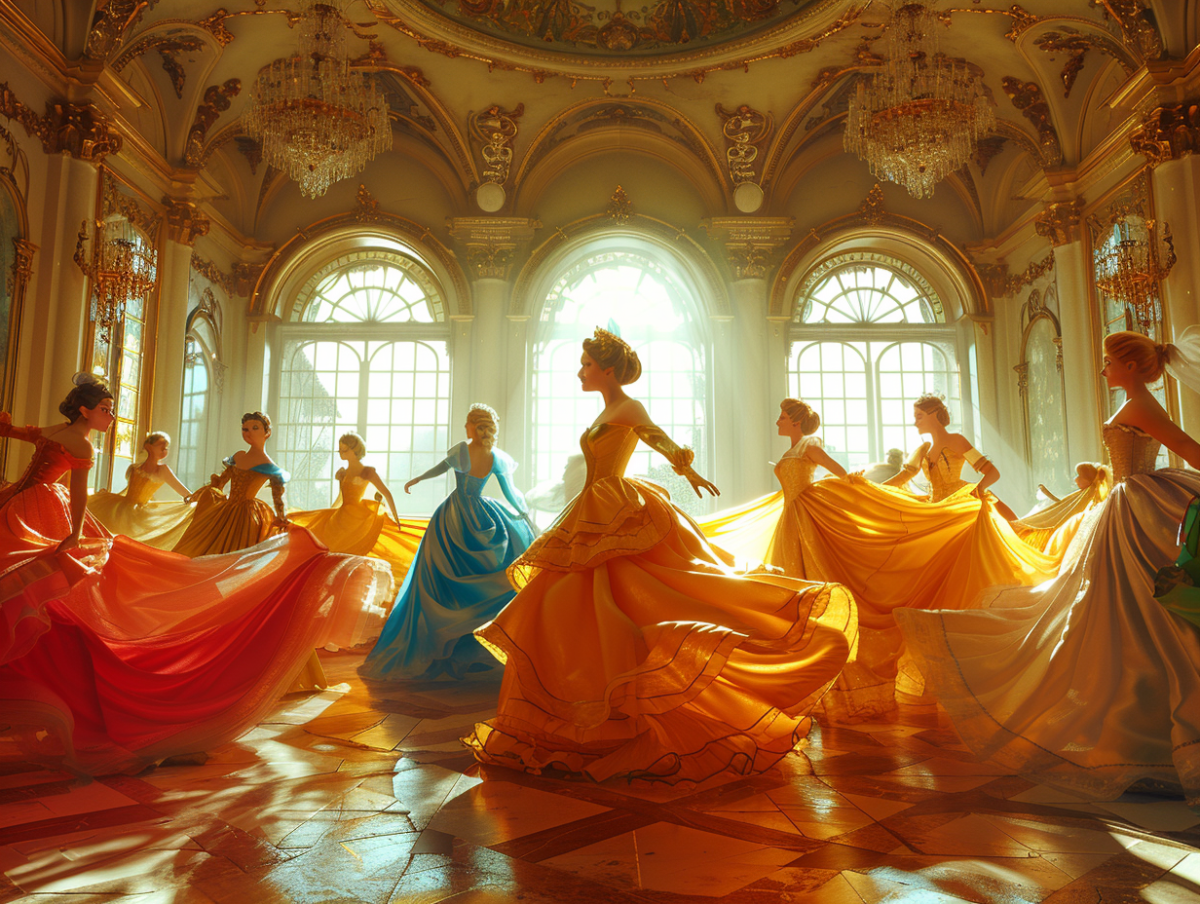
In the enchanted kingdom of Disney, princesses defy the laws of time, their stories transcending eras. From the sweet Snow White of the 1930s to the determined Moana of the 21st century, these royal figures have evolved, reflecting the values and aspirations of each generation. Their ages, often young, symbolize innocence and the potential for growth, while their adventures defy aging, their features remaining eternally youthful. The immutability of their youth raises questions about the representations of age and time in narratives meant to captivate and inspire young minds.
Perception and Representation of Time in Disney Princesses
The iconic characters of Disney films, embodied by the princesses, have always been powerful vectors of youth and innocence. The Disney princess age seems frozen in a temporality where eternal youth is synonymous with purity and infinite possibilities. Snow White, the first princess of this pantheon, appeared in 1937 and was only 14 years old. This detail, rarely highlighted, underscores the tendency of these tales to assign extraordinary destinies to figures of great youth, facing challenges that, in reality, would befall individuals much older.
The continuity of this trend is palpable through the decades: whether it’s Aurora, known as Sleeping Beauty, who was 16 during her first appearance in 1959, or Ariel, the 16-year-old sea princess from the 1989 film The Little Mermaid. These heroines share a common characteristic: they are all immersed in extraordinary adventures at an age when, traditionally, existence focuses on education and self-discovery. Their youth is emphasized, while their psychological and emotional maturity seems disconnected from their biological age.
Brazilian artist Isaque Arêas has revisited these iconic figures by redesigning them at the age they would be if they had aged since their first appearance on screen. This artistic approach highlights the gap between the frozen representation of Disney princesses and the inexorable reality of the passing of time. Characters like Cinderella, Jasmine, or Tiana, although their ages range from 15 to 19 in their respective films, are projected into a temporality that gives them new depth, subtly questioning the narrative choices of the company and their impact on the audience’s perception of time and age.

The Influence of Princesses’ Age on Society and Young Audiences
In the collective imagination, Disney princesses hold a prominent place, especially among the youngest. Their youth, often associated with virtues such as beauty, purity, and openness to the wonders of the world, permeates minds and helps shape a certain vision of femininity. Indeed, these figures embody role models that children, and more specifically young girls, are encouraged to identify with. Closely follow the evolution of these characters, as they reflect the shifts in societal expectations.
The Walt Disney Company, guardian of this lucrative franchise, has continuously adapted its heroines to contemporary currents. While the early princesses, such as Snow White or Aurora, embodied passivity and a certain expectation of external salvation, more recent figures, like Merida or Tiana, showcase increased autonomy and determination. These modern era heroines, although young, are often presented as role models of empowerment for female viewers, challenging traditional gender stereotypes.
This eternal youth of Disney princesses can also convey ambivalent messages, particularly regarding maturity and responsibilities. Mulan and Jasmine, for example, despite being 16 and 15 years old respectively, demonstrate resilience and wisdom that far exceed the usual expectations for their age. This gap between actual age and attributed capabilities raises questions about the message sent to young people regarding precocity and personal achievement.
From this reality arises a reflection on the role of modern fairy tales in shaping the aspirations of the young. Can the constant representation of youth as a vector of adventure and change influence how children perceive aging and the different stages of life? The company of Uncle Walt, aware of these issues, continues to rewrite its narratives to anchor them in a more nuanced reality, where the age of princesses is no longer an unattainable ideal, but one component among others of their character richness.