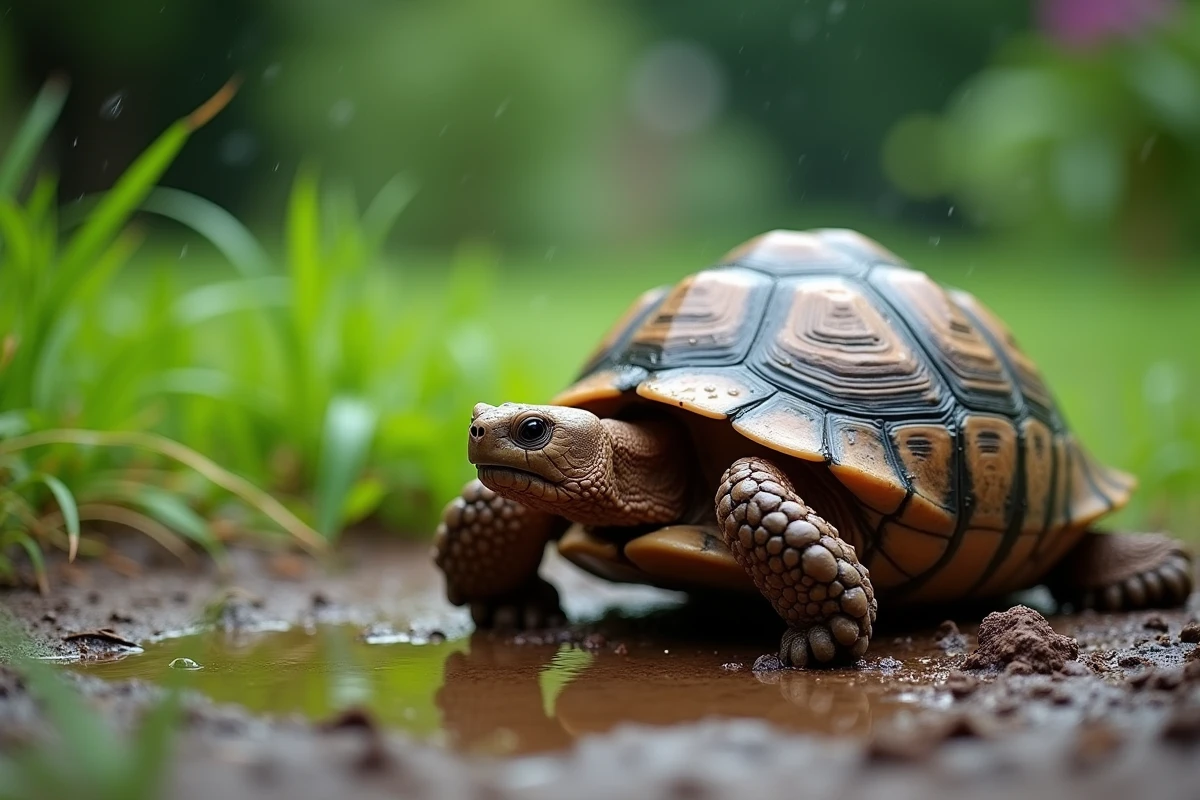
Land turtles regularly come out in the rain, remain motionless with their shells exposed, and sometimes refuse to return to their shelter despite heavy rain. This behavior intrigues and worries owners, especially those who keep a Hermann tortoise in an outdoor enclosure. The question deserves to be asked from a specific angle: does rain really benefit a land tortoise, or does it present measurable risks depending on the conditions of the enclosure?
Drainage of the enclosure and health risks related to rain
Most discussions among breeders focus less on the rain itself than on the state of the soil after the downpour. A poorly drained enclosure accumulates water, turns the substrate into mud, and creates an environment conducive to skin and respiratory infections in land tortoises.
Several documented experiences report dirty feet, cluttered substrate, and a tortoise unable to move properly after heavy rains. The problem does not come from the falling water, but from the water that stagnates in an enclosure without drainage.
To better understand if tortoises like rain, it is essential to distinguish between two radically different situations: a downpour on well-draining soil, and prolonged rain on clayey or low-lying terrain.
| Situation | Well-drained soil (sandy, sloped) | Poorly drained soil (clayey, flat) |
|---|---|---|
| Short downpour | Beneficial hydration, the tortoise drinks and bathes | Temporary puddles, limited risk |
| Prolonged rain (several days) | The soil dries quickly, little impact | Persistent mud, dirty feet, risk of infection |
| Cold rain (below 12 °C) | Possible thermal stress even with good drainage | Combined hypothermia and stagnation |
This table summarizes the shared observation of many breeders: the quality of the soil matters more than the quantity of rain.
Hydration from rain in the Hermann tortoise
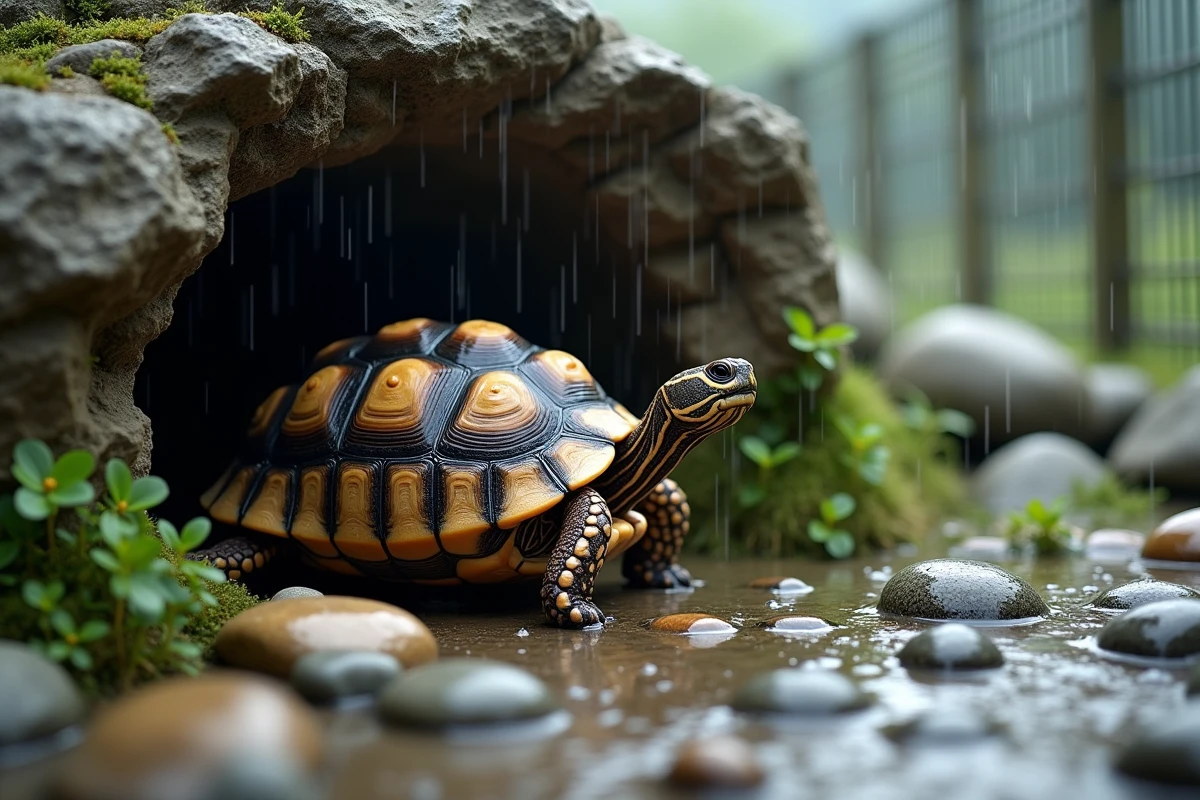
Mediterranean land tortoises, particularly the Hermann tortoise, use rain as a source of hydration. They adopt a characteristic posture, with their shell raised and hind legs extended, allowing them to capture water running down their backs and drink it directly.
This behavior explains why a tortoise often refuses to return to its shelter when it rains. It does not stay outside out of indifference: the rain triggers an active hydration reflex.
Rain and water points in the enclosure
A frequently overlooked point concerns the quality of the water available in the enclosure after rain. Rainwater collected in a shallow dish is generally clean and appreciated by tortoises. In contrast, stagnant water on the ground, mixed with dirt and droppings, does not replace a clean water source.
Breeders who observe their tortoises drinking in the rain sometimes conclude that a permanent water source is unnecessary. Field reports show the opposite: rain does not replace an accessible water trough.
Dry shelter and microclimates in the land tortoise enclosure
A well-designed land tortoise enclosure does not seek to eliminate rain but to offer a choice. The tortoise should be able to expose itself to the downpour if it wishes, then return to a dry and protected area at any time.
Best practices documented by breeders emphasize the coexistence of multiple microclimates within the same enclosure:
- A closed shelter with dry substrate (straw, hay, loose soil) where the tortoise can take refuge and sleep without residual moisture
- A partially shaded area from plants or a partial roof, which reduces the direct impact of rain without blocking light
- An open area exposed to sun and rain, with draining soil, where the tortoise can warm up and hydrate naturally
The most common mistake is forcing the tortoise to stay sheltered during the rain. Several testimonies describe Hermann tortoises being placed back in their greenhouse who immediately come out to return to the downpour. Forcing shelter generates stress without real benefit if the enclosure is properly arranged.
Special case: emergence from hibernation
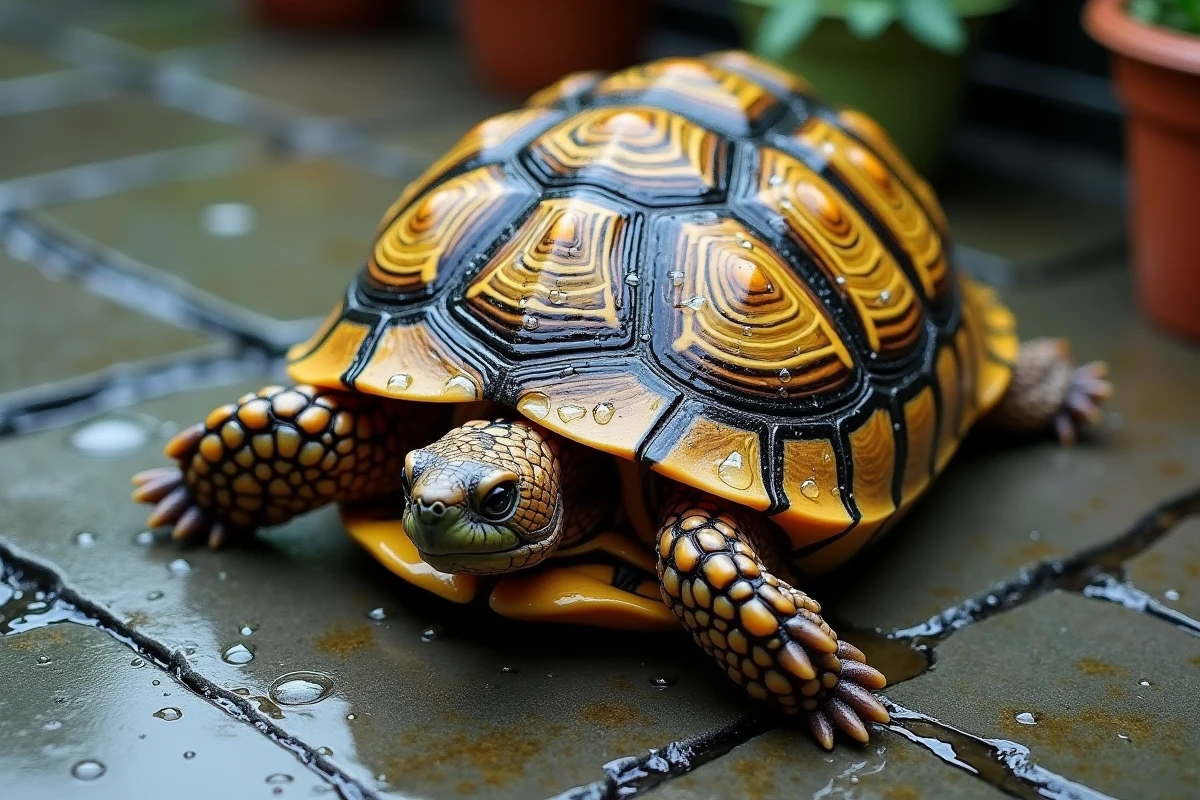
The first rains of spring often coincide with the emergence from hibernation. A tortoise that has just awakened may take a week to return to normal feeding behavior. It may stay out in the rain without eating, which alarms owners.
This behavior is documented as normal in exchanges among experienced breeders. The tortoise uses the rain to rehydrate after several months of hibernation before starting to feed again. The outside temperature plays a crucial role: if it remains too low, the tortoise will not eat, whether it rains or not.
Designing an enclosure resistant to heavy rains
Rather than wondering if rain poses a problem, the practical question is how to design the enclosure to absorb rainy episodes without putting the tortoise at risk.
- Install the enclosure on slightly sloped terrain to avoid water accumulation
- Use a draining substrate (soil-sand mix) rather than compact clay soil
- Place the shelter on a raised area of a few centimeters to prevent water from entering
- Check after each rainy episode that the water point remains clean and not polluted by surrounding mud
An enclosure designed for drainage allows the tortoise to enjoy the rain without the owner needing to intervene at every downpour. The goal is the tortoise’s autonomy, not constant control.
Land tortoises do not fear rain itself. They actively use it to hydrate and clean their shells. The only documented risk factor remains waterlogged soil combined with low temperatures, in an enclosure lacking an accessible dry area. A well-drained enclosure with a dry shelter resolves the issue without needing to move the tortoise at every drop.