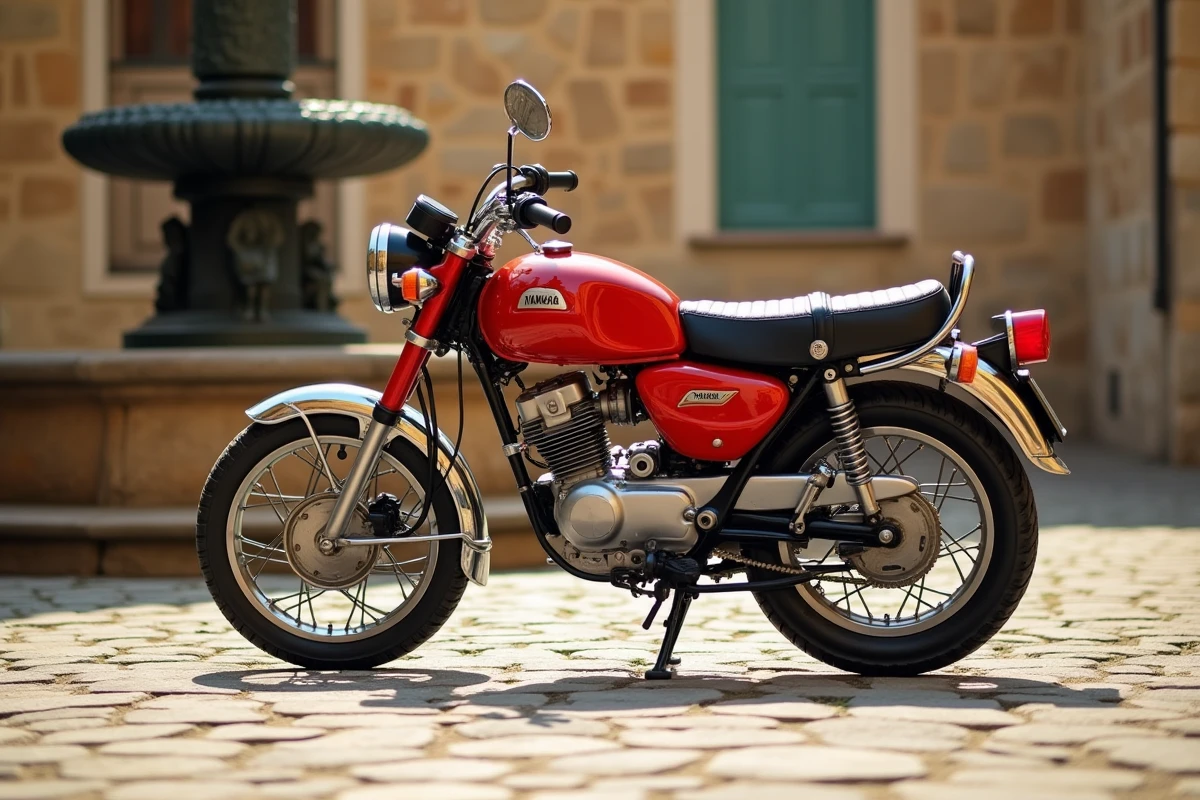
The Yamaha Chappy and the Honda Dax belong to the family of mini-motos, these compact two-wheelers with small wheels originally designed for short trips and leisure rides. Their engine displacement is capped at 125 cm³, making them accessible with a category B license supplemented by a seven-hour training course. Despite this technical kinship, the two machines cater to very different buyer profiles. One can be found new at dealerships, while the other is only available on the second-hand market.
Parts Supply: The Real Divide Between Dax 125 and Chappy 125
Before comparing style or engine, one point conditions any purchase project: the ability to maintain and repair the machine in the long term. The Honda Dax ST125 currently benefits from a structured network of new parts, supplied by Honda and by aftermarket shops specializing in mini-motos. Consumables, bodywork, performance parts: the offering is well-documented and regularly restocked.
The Chappy 125, on the other hand, has not been produced since the 1990s. Its supply relies on second-hand stocks, occasional remanufacturing, or Asian imports. Structured new references are rare. Therefore, a project for regular rides on a Chappy requires a tolerance for mechanical unpredictability and a strong taste for hunting for parts, whereas a Dax owner simply places an order online.
Those who are hesitating between the Chappy 125 or the Dax on EpicBuzz will find a detailed comparison that also delves into this logistical question.

Registration and Title for an Older Chappy: A Often Underestimated Step
Many Chappys available on the market are models from the 1970s-1980s, sometimes sold without a registration document. This is a common case for mini-motos from that era, often stored in garages for decades without administrative follow-up.
Since the widespread implementation of the Vehicle Registration System (SIV) and the digitization of procedures, a regulated process allows for re-registering a vehicle without a registration document. This requires gathering proof of origin, a FFVE certificate (French Federation of Vintage Vehicles), or consistent transfer documents.
This process takes time and can block an impulsive purchase. With the Dax 125, this question does not arise: the vehicle comes from the dealership with all its paperwork.
Documents to Anticipate for a Chappy Without a Registration Document
- A signed transfer certificate from the seller, even if the vehicle is not registered at the time of sale
- A FFVE certificate if the model is over thirty years old, confirming its authenticity and original compliance
- A technical inspection or an appraisal in certain cases, depending on the vehicle’s condition and prefectural requirements
Engine and Road Behavior: Two Philosophies for Riding
The Honda Dax ST125 features a single-cylinder four-stroke engine with electronic fuel injection. This modern unit offers reliable starting, controlled fuel consumption, and simplified maintenance. The road behavior remains that of a mini-moto: stable at low speeds, agile in the city, limited on major roads where the compact size and small wheels make overtaking uncomfortable.
The Chappy 125, in its original versions, relied on a two-stroke engine (for smaller displacement models) or a four-stroke depending on the generation. The engine character is rougher, louder, with a less linear throttle response. For some, it is precisely this temperament that gives the machine its charm.
In terms of comfort, both machines share a limitation: their compact seating can become tiring over long distances. They are designed for rides of a few dozen kilometers, not for covering main roads all day long.
Chappy or Dax: Which Rider Profile?
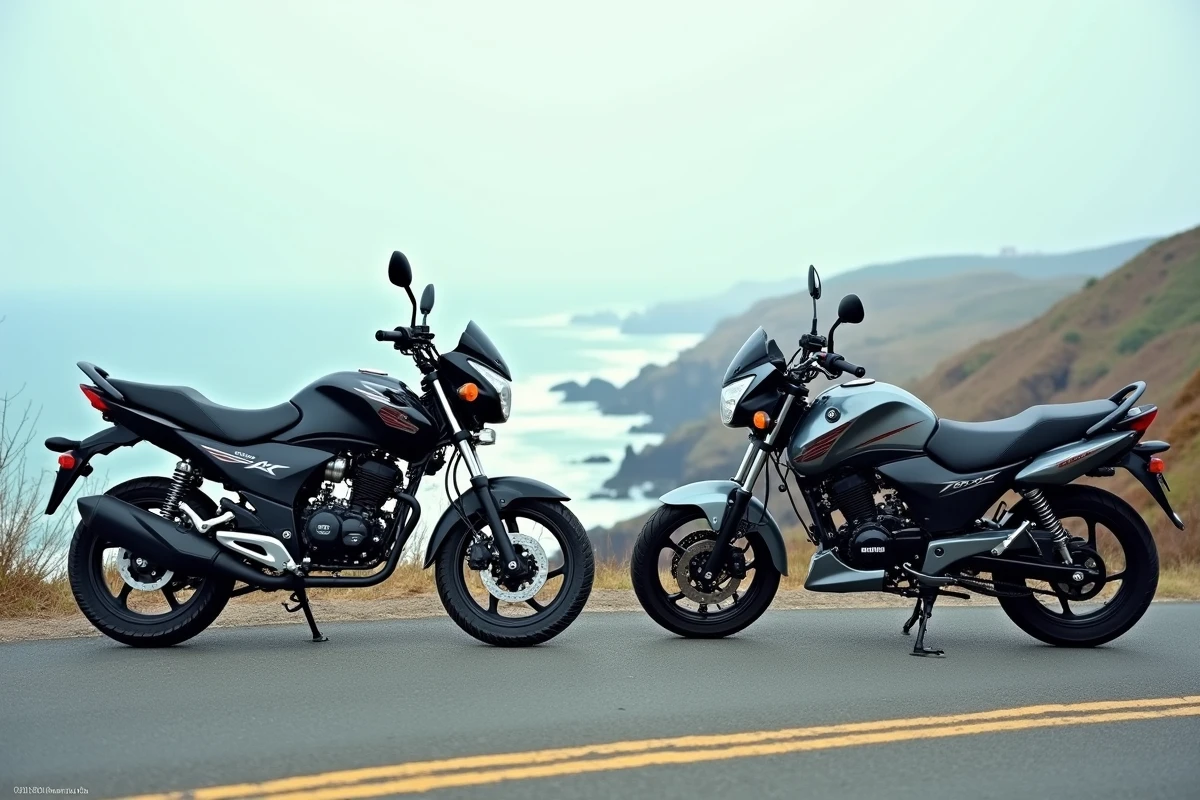
The choice between these two bikes is not just a matter of technical specifications. It reflects a different relationship with two-wheelers.
- The Dax 125 is aimed at someone who wants a reliable mini-moto ready to ride, with standard maintenance at a Honda dealer, a manufacturer’s warranty, and smooth resale in an active market
- The Chappy 125 attracts enthusiasts of characterful vehicles, ready to invest time in searching for parts and maintaining a machine that is no longer supported by its manufacturer
- For daily or semi-regular use (short trips, weekend rides), the Dax offers significantly greater peace of mind
- For a collection, restoration project, or occasional rides with a distinctly vintage look, the Chappy remains a unique choice, with an intact charm within the mini-moto community
The Price Factor in the Second-Hand Market
A Chappy in good condition varies in price depending on mechanical condition, the presence of paperwork, and the exact model. Restored examples can reach prices comparable to those of a new Dax, raising the question of the balance between investment and reliability. An expensive Chappy is not necessarily a reliable Chappy, as cosmetic restoration does not guarantee anything about the internal condition of the engine or transmission.
The Dax 125, sold new at dealerships, has a known and stable catalog price. Its depreciation remains moderate thanks to sustained demand in the recent second-hand market.
The final choice depends on what the ride represents: a means of moving with pleasure, or a mechanical project that is part of the pleasure itself. Both approaches are valid, provided one buys with full knowledge of the facts.