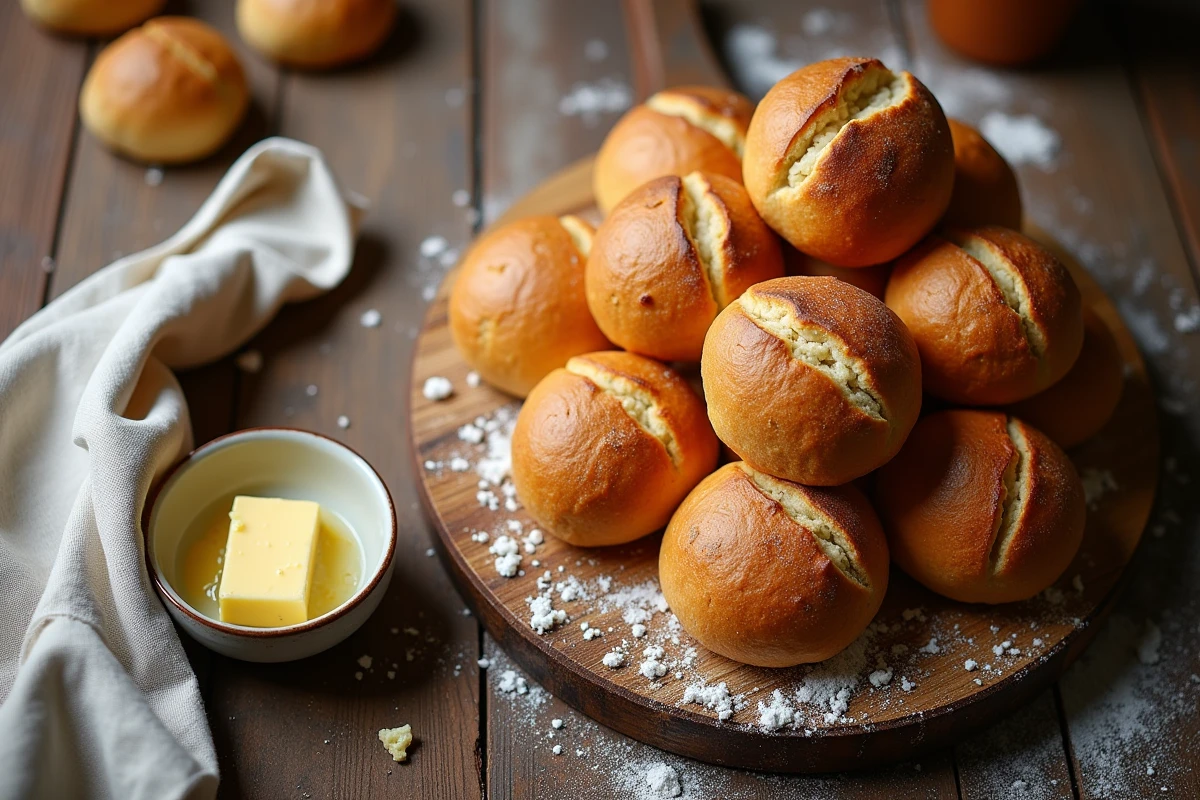
The Antillean butter bread relies on a precise technical balance between fat, hydration, and long fermentation. Its stretchy crumb, fine golden crust, and characteristic aroma are not left to chance. Understanding this product begins with mastering the parameters that distinguish it from a classic metropolitan brioche.
Fermentation and kneading of butter bread: technical parameters
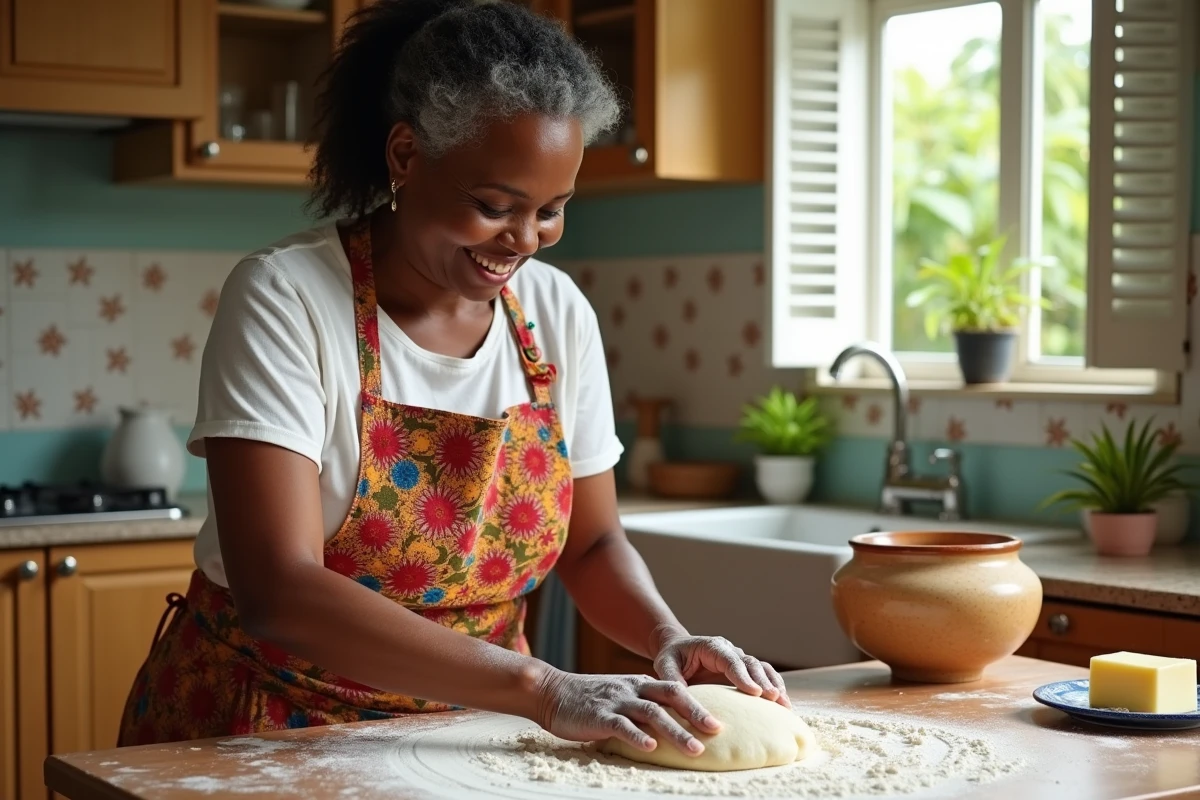
The dough for Antillean butter bread requires prolonged kneading in second gear to develop a gluten network capable of absorbing a high amount of butter without collapsing. We recommend a total kneading time of about twenty minutes, incorporating the softened butter in increments, only after the dough has reached the initial smoothing stage.
Slow fermentation in a cool environment radically changes the aromatic profile. An overnight fermentation at low temperature allows the yeasts to produce secondary aromatic compounds that rapid rising at room temperature does not generate. It is this step that gives butter bread its olfactory signature, halfway between brioche and panettone.
The hydration rate remains moderate compared to traditional bread. Milk replaces water, bringing lactose (browning of the crust through the Maillard reaction) and soluble proteins that strengthen the alveolar structure.
The proportion of eggs, varying by family, acts as a natural emulsifier and contributes to the preservation of the soft crumb for several days. To delve deeper into the origins of this preparation, we refer to Antillean butter bread on 11 Le Magazine, which traces the historical roots of this Creole recipe.
Wood-fired baking and artisanal butter bread in Guadeloupe
Guadeloupean bakers have revived wood-fired baking in recent years. This return to the source modifies two things: the crust and the taste. The wood-fired oven produces a crispier crust and a smoky flavor that the domestic electric oven cannot replicate, even with a refractory stone and steam injection.
The difference lies in radiant heat. A wood-fired oven heats through direct radiation from the embers and thermal restitution from the brick walls. The temperature decrease during baking is gradual and natural, which promotes slow drying of the crust without drying out the heart of the crumb.
In an electric oven, we observe that static or ventilated heat tends to uniformize browning, producing a paler and less contrasted result. Wood-baked butter bread features irregular caramelization areas, a sign of authenticity sought by enthusiasts.
Settings for acceptable home baking
- Preheat the oven to the maximum available temperature for at least thirty minutes, with a baking stone or an upside-down cast iron plate on the bottom rack
- Place the butter bread directly on the hot stone, then reduce the temperature by twenty to thirty degrees after the first five minutes to avoid excessive surface browning
- Place a container of boiling water in the bottom of the oven for the first ten minutes of baking, then remove it to allow the crust to dry and become crispy
Creole variations of butter bread: Martinican, Guadeloupean, and Guyanese
Butter bread is not a fixed recipe. Each territory of the French Antilles has its own version, and the differences lie in specific formulation points.
In Martinique, the traditional version is distinguished by a more generous proportion of butter and flavoring with bourbon vanilla, sometimes complemented by a hint of grated nutmeg. Braiding (plaited bread) remains the norm for Christmas and Easter celebrations.
In Guadeloupe, the dough frequently incorporates coconut milk as a partial replacement for cow’s milk, which alters the texture of the crumb, making it slightly richer and more fragrant. This variant is gaining popularity, including in vegan adaptations that replace butter with virgin coconut oil.
Trend towards vegan versions
In recent years, vegan adaptations of butter bread have used plant-based milks, particularly local coconut milk, popularized by Creole influencers. Coconut milk provides saturated fat that partially mimics the behavior of butter in the dough, but the gluten network develops differently without dairy proteins and eggs.
To compensate, some bakers add cassava starch as a binder and sunflower lecithin as an emulsifier. The result remains distinct from classic butter bread, with a denser crumb and shorter shelf life.
Protection of know-how: Martinican butter bread towards an IGP
In 2025, the INAO initiated a procedure to recognize Martinican butter bread as a Protected Geographical Indication (IGP). This initiative aims to protect artisanal know-how against the competition from industrial versions produced outside the Antilles, often with cheap vegetable fats instead of butter.
An IGP would impose a strict specification on ingredients and manufacturing methods. The criteria under discussion concern the origin of the butter, the type of flour, the minimum fermentation duration, and the prohibition of artificial emulsifiers.
This recognition would also establish a framework for the use of the designation in metropolitan retail, where products labeled “Antillean butter bread” do not always respect the traditional proportions of butter and sugar.
Antillean butter bread remains a living product, carried by artisans who adapt the recipe without denying its fundamentals. The IGP recognition, if it comes to fruition, will set a quality floor without freezing the evolution of regional variants. It is probably the best guarantee that this bread retains its place at the center of Creole tables.